


2026: Lighting and production management on the agenda

How can a fish farmer make smart use of new data technologies and analytics to improve salmon welfare? Eighteen years after the first ‘Smolt Production in the Future’ conference, technology has become an integral part of production management.
“Advanced technology is nothing new in recirculating aquaculture systems (RAS) and closed-containment facilities. But at this year’s conference, its role in improving welfare really comes to the fore,” says Trine Ytrestøyl of Nofima, who heads the conference.
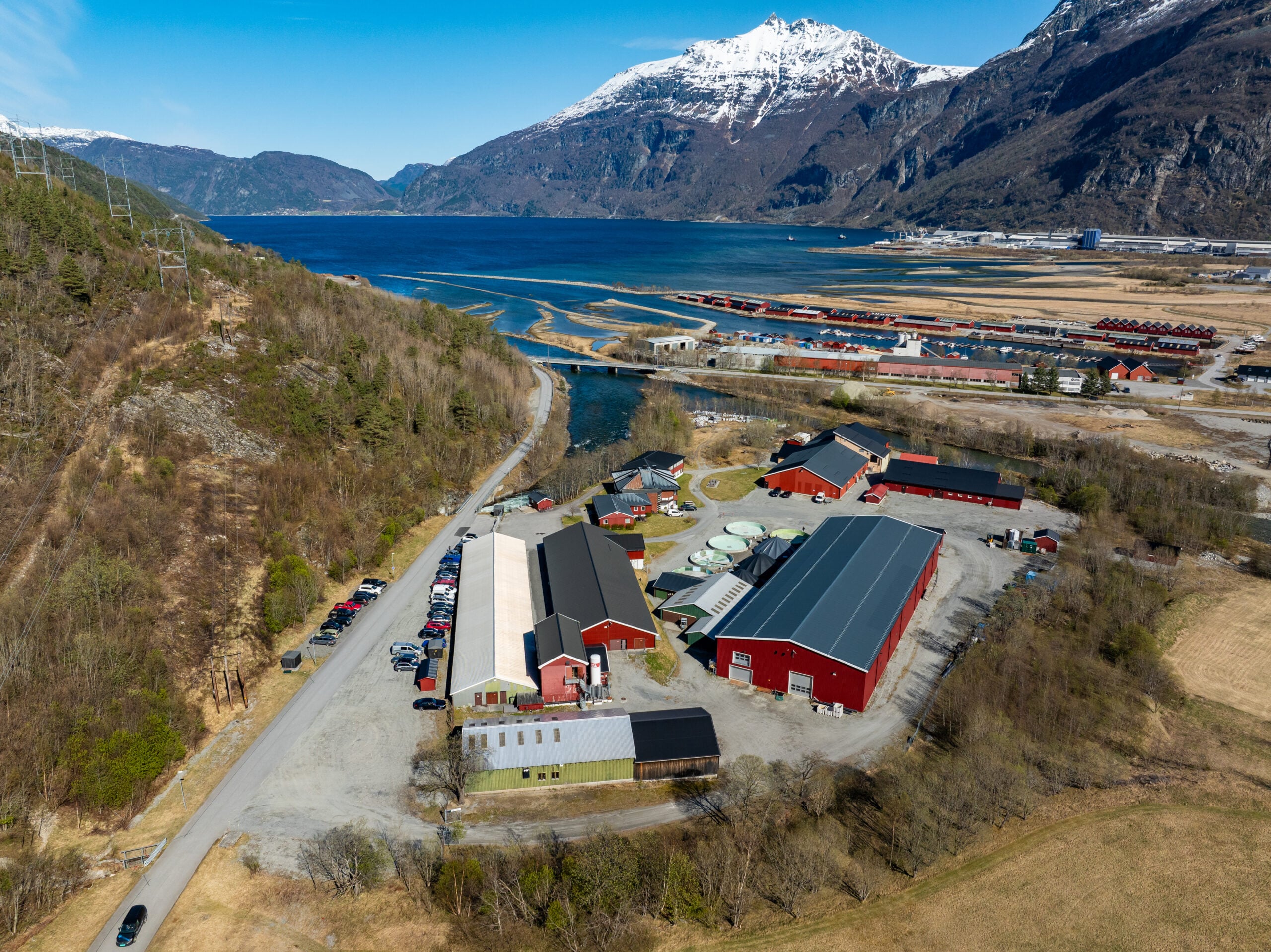
Whether the conference lives up to her promise remains to be seen when it takes place on 14 and 15 October in Sunndalsøra.
“Several exhibitors will be showcasing new technologies for managing production to improve welfare. We are seeing new approaches to production management that were not in use at the previous conference in 2024,” she says.
At the previous conference, a fish health biologist delivered a scathing critique of how intensive salmon farming, with its use of continuous light, has deprived salmon of their natural daily rhythm.
This year, the organisers have put lighting on the agenda. The programme includes an entire session on lighting regimes and their implications for welfare, as well as a session on good smolt production in practice, with contributions from industry and research. Nineteen suppliers to the aquaculture industry will showcase their products and services in a dedicated exhibition area.
Lighting will also feature in a discussion about salmon biology within these technological systems. How can we use the systems to produce healthy, robust smolt, and do we have the knowledge we need?
The conference opens with Nina Santi of INAQ, Ståle Walderhaug of FHF and Kristoffer Lindbäck-Larsen of Evolys challenging the audience on fish welfare. Nofima Director Finn Weltzien will lead a discussion with them on whether we have the knowledge needed to invest in good smolt quality.
Knowledge takes centre stage
Since 2008, several conferences on RAS and closed-containment facilities have emerged, each with a different focus. Trine Ytrestøyl maintains that ‘Future Smolt Production’ is the one that puts new knowledge centre stage, drawing on both research and practical experience. No fewer than seven R&D organisations will share new knowledge with the audience, alongside a range of fish farmers, suppliers and consultants.
“New knowledge emerges where research, fish farmers and suppliers meet. We work together, with valuable support from funders, to find out what actually works, not just what we think works. That is what we want to share with the audience,” she concludes.